The daily workplace
The dashboard and what needs attention, team chat and record discussions, the calendar, your own to-do list, notifications, and asking the assistant.
11 étapes
Le parcours complet, sans commentaire audio.
1 · The dashboard
Not a wall of charts: the figures your role is allowed to see, and a list of what actually needs a person today.
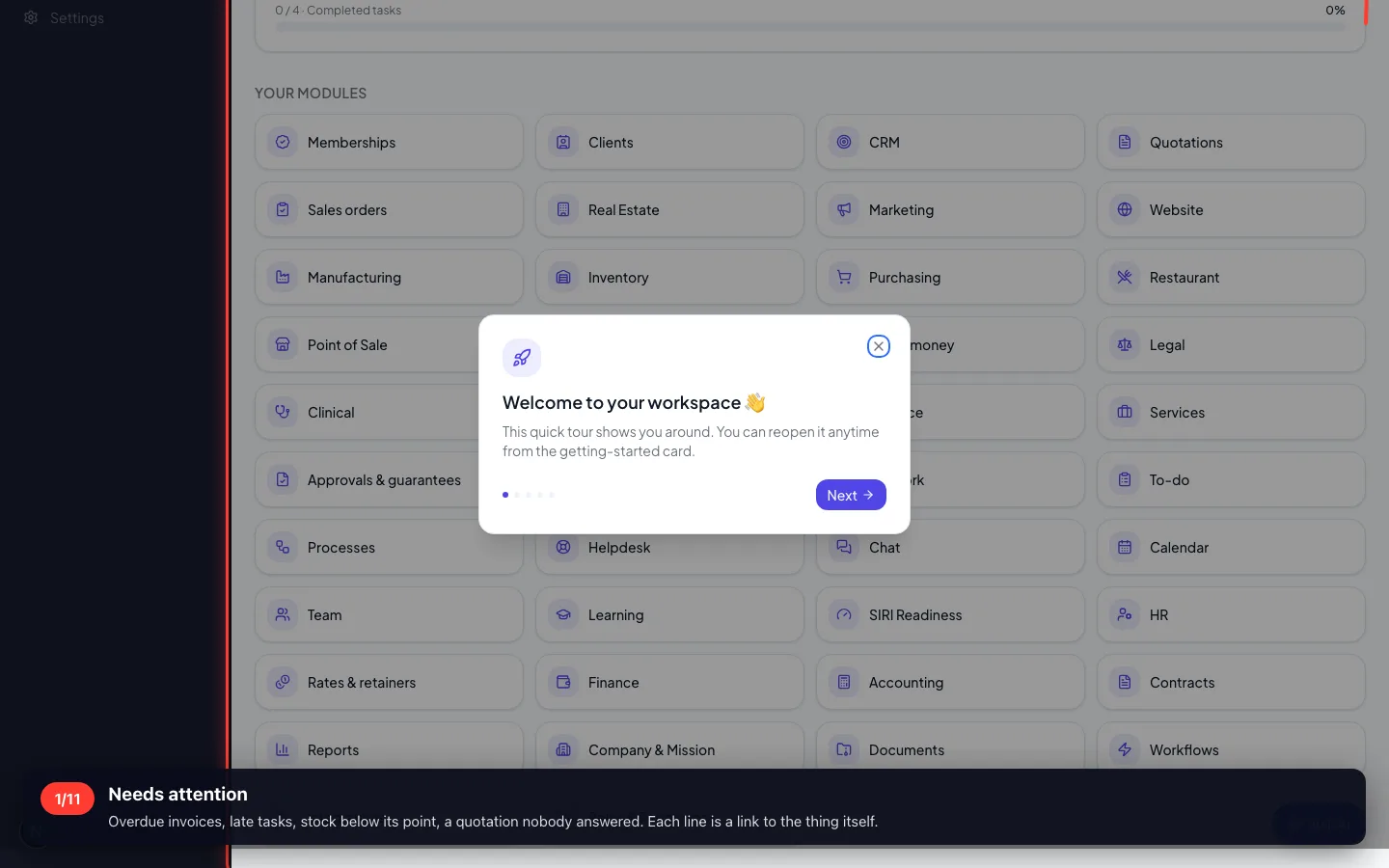
1Needs attention
Overdue invoices, late tasks, stock below its point, a quotation nobody answered. Each line is a link to the thing itself.
- 2
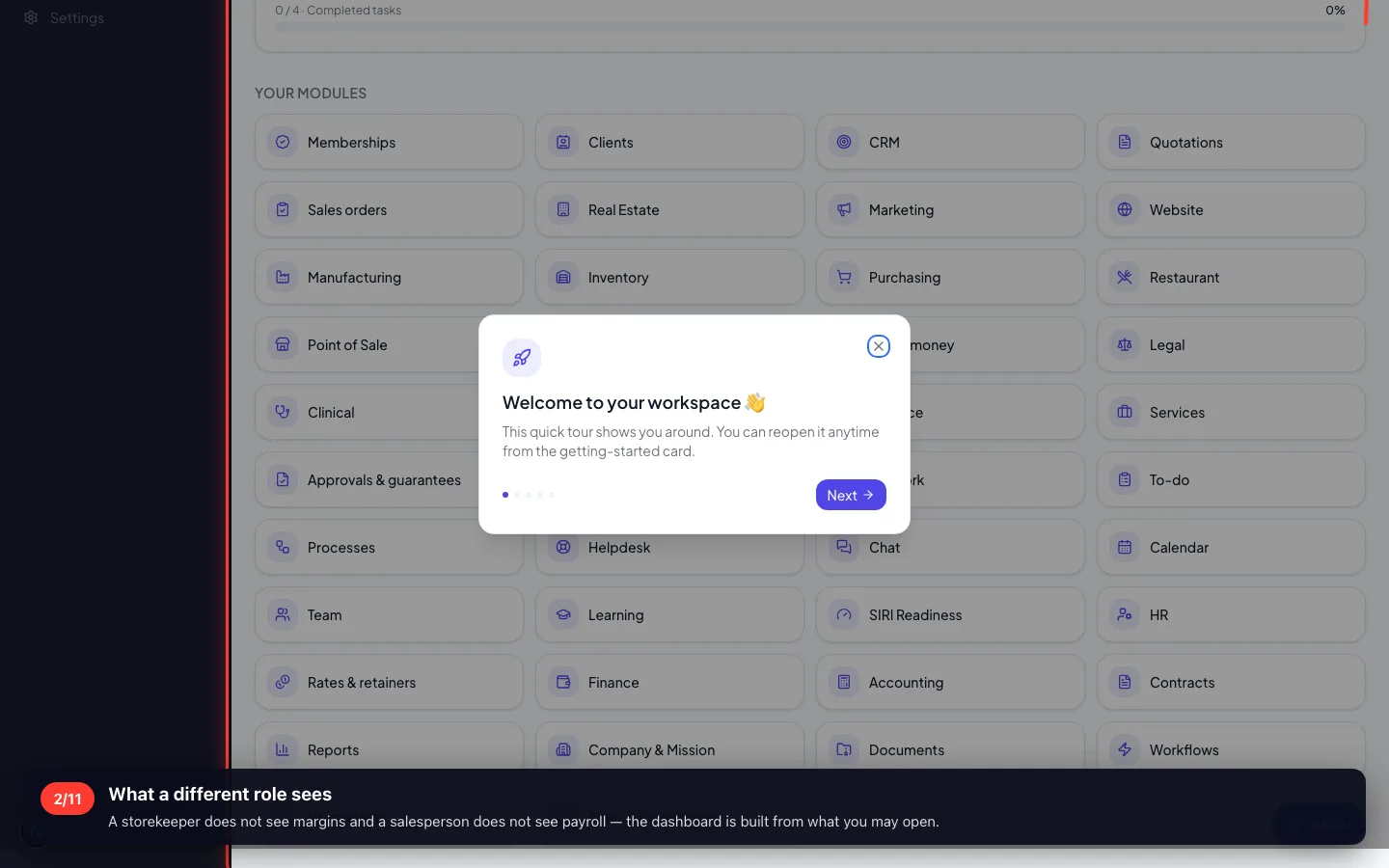
What a different role sees
A storekeeper does not see margins and a salesperson does not see payroll — the dashboard is built from what you may open.
2 · Talking about work
Two places: a chat channel for the team, and a discussion attached to the record itself — so the decision lives with the document.
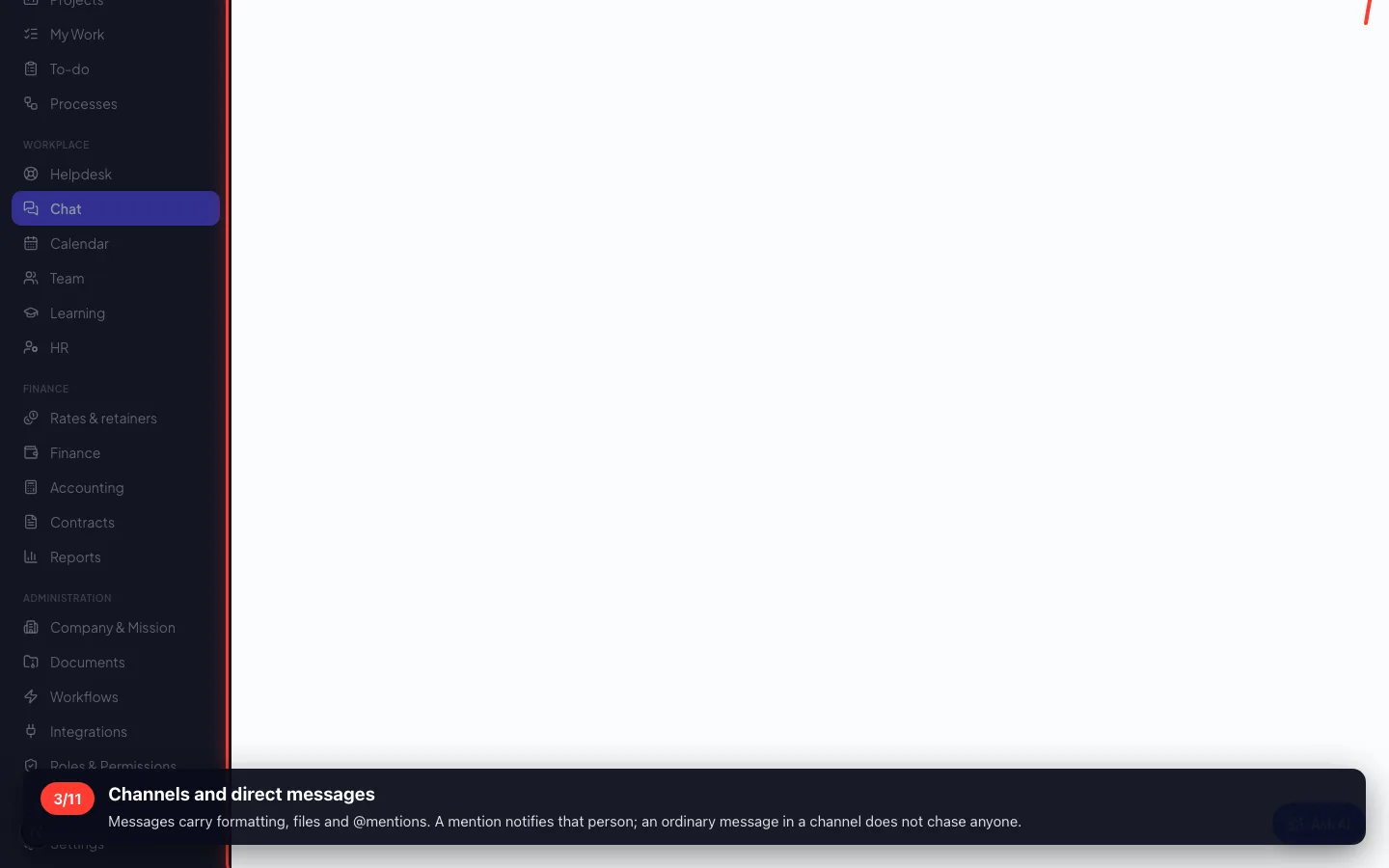
3Channels and direct messages
Messages carry formatting, files and @mentions. A mention notifies that person; an ordinary message in a channel does not chase anyone.
- 4
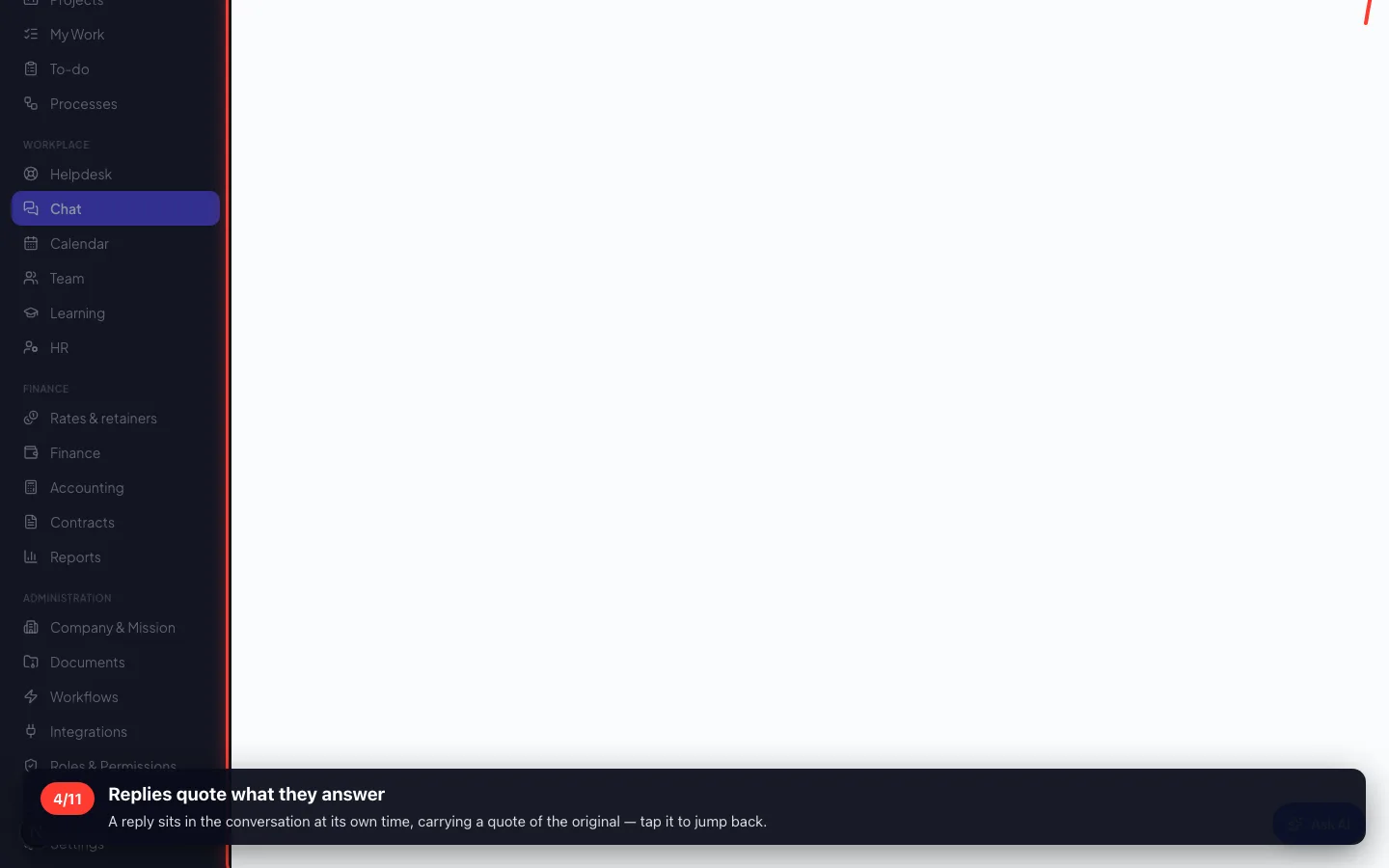
Replies quote what they answer
A reply sits in the conversation at its own time, carrying a quote of the original — tap it to jump back.
3 · The calendar
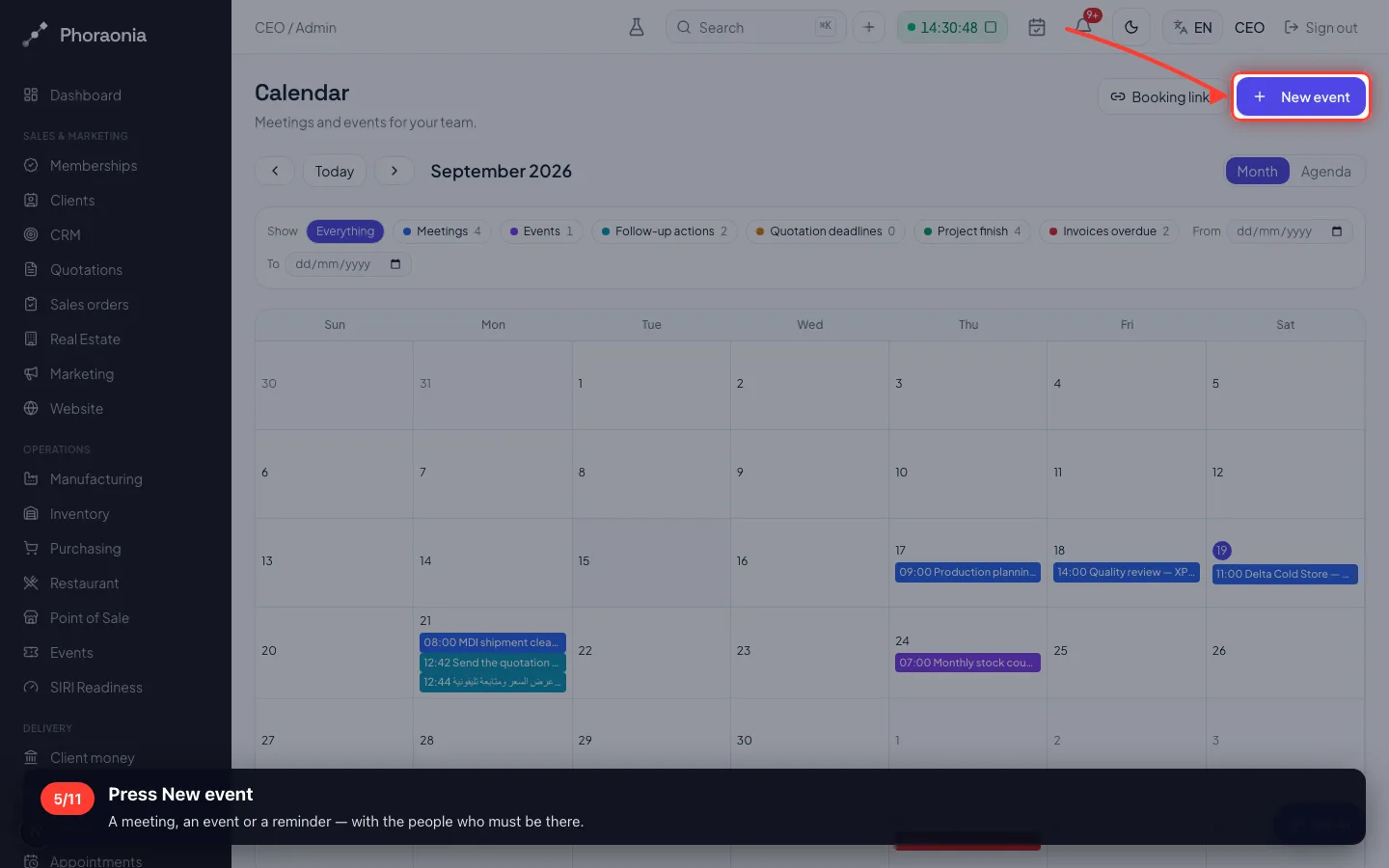
Meetings and events with the people invited, linked to the client, lead or project they belong to.
5Press New event
A meeting, an event or a reminder — with the people who must be there.
- 6
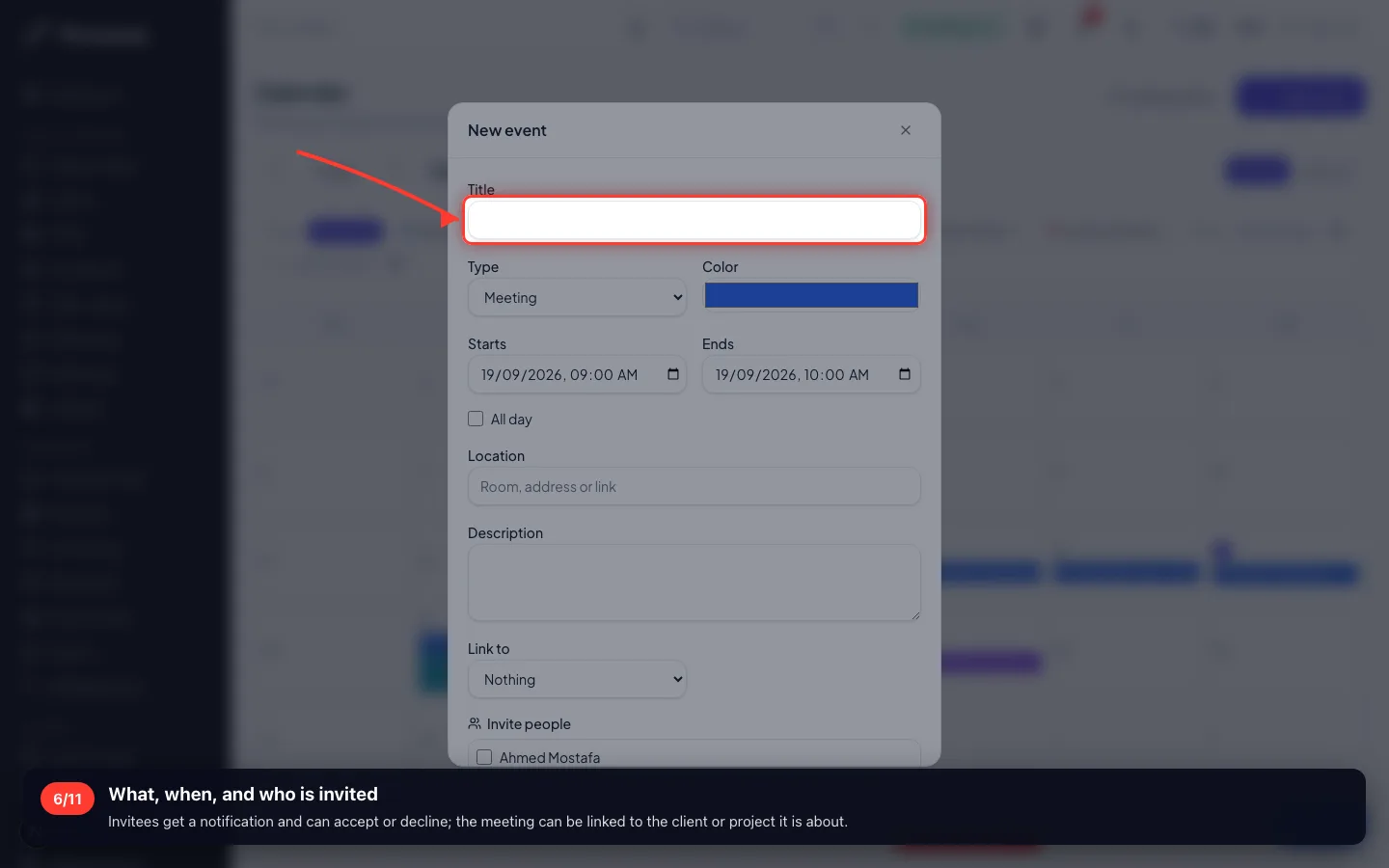
What, when, and who is invited
Invitees get a notification and can accept or decline; the meeting can be linked to the client or project it is about.
- 7
A meeting is a record too
Invitees accept or decline, and the meeting stays attached to the deal it was about.
4 · Your own list
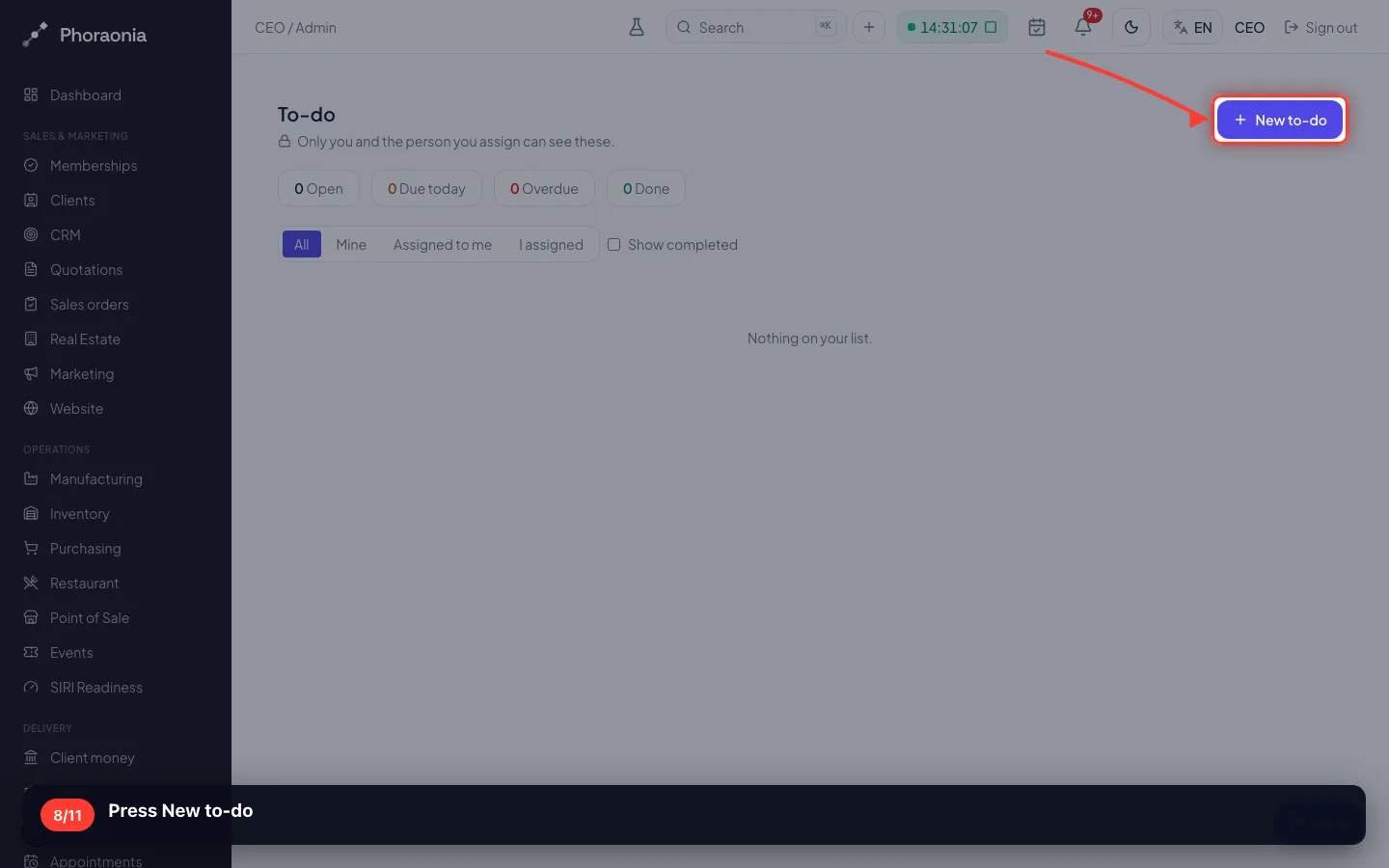
To-do is private: the small things that are not project tasks and should not clutter a board.
8Press New to-do
- 9
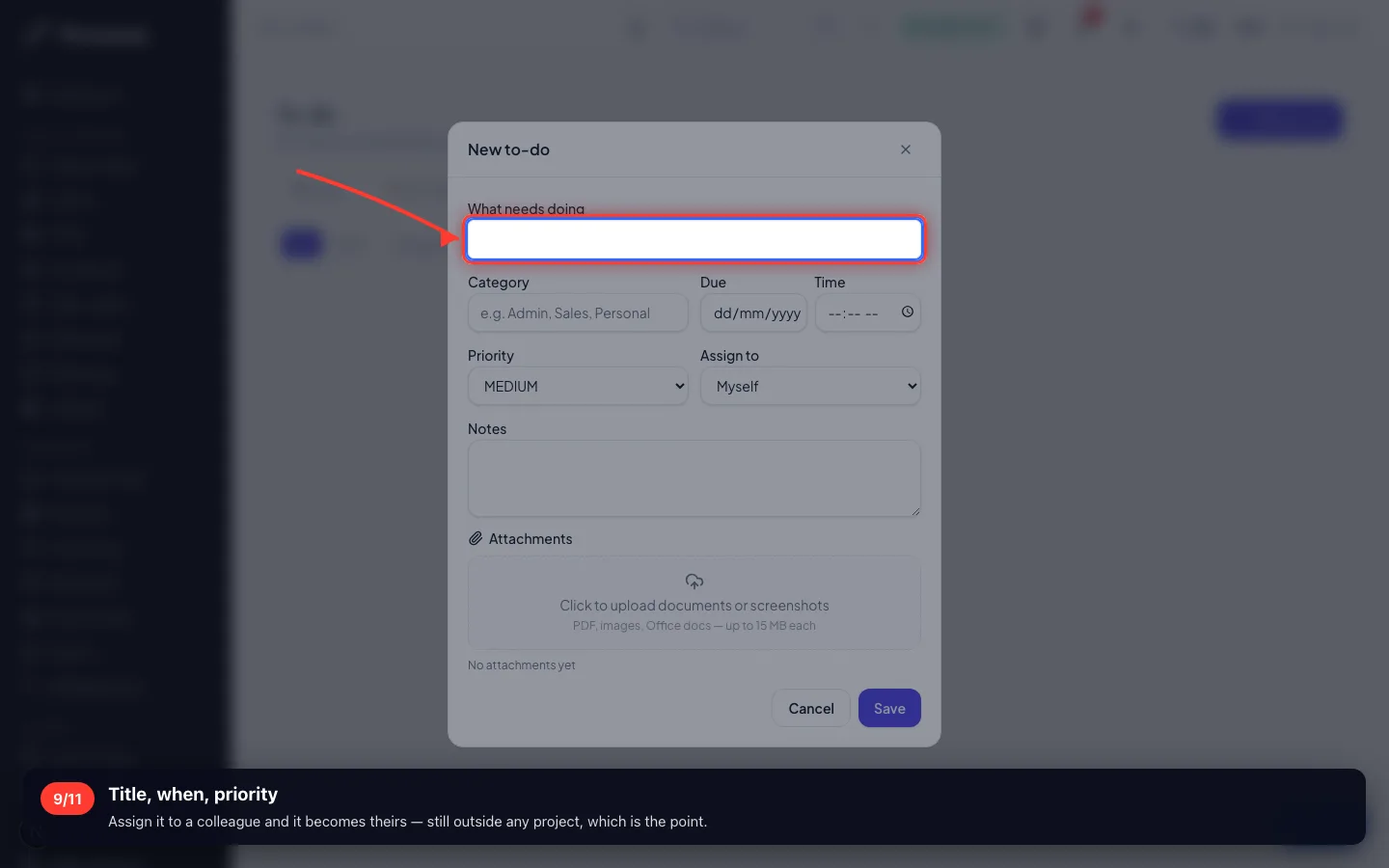
Title, when, priority
Assign it to a colleague and it becomes theirs — still outside any project, which is the point.
- 10
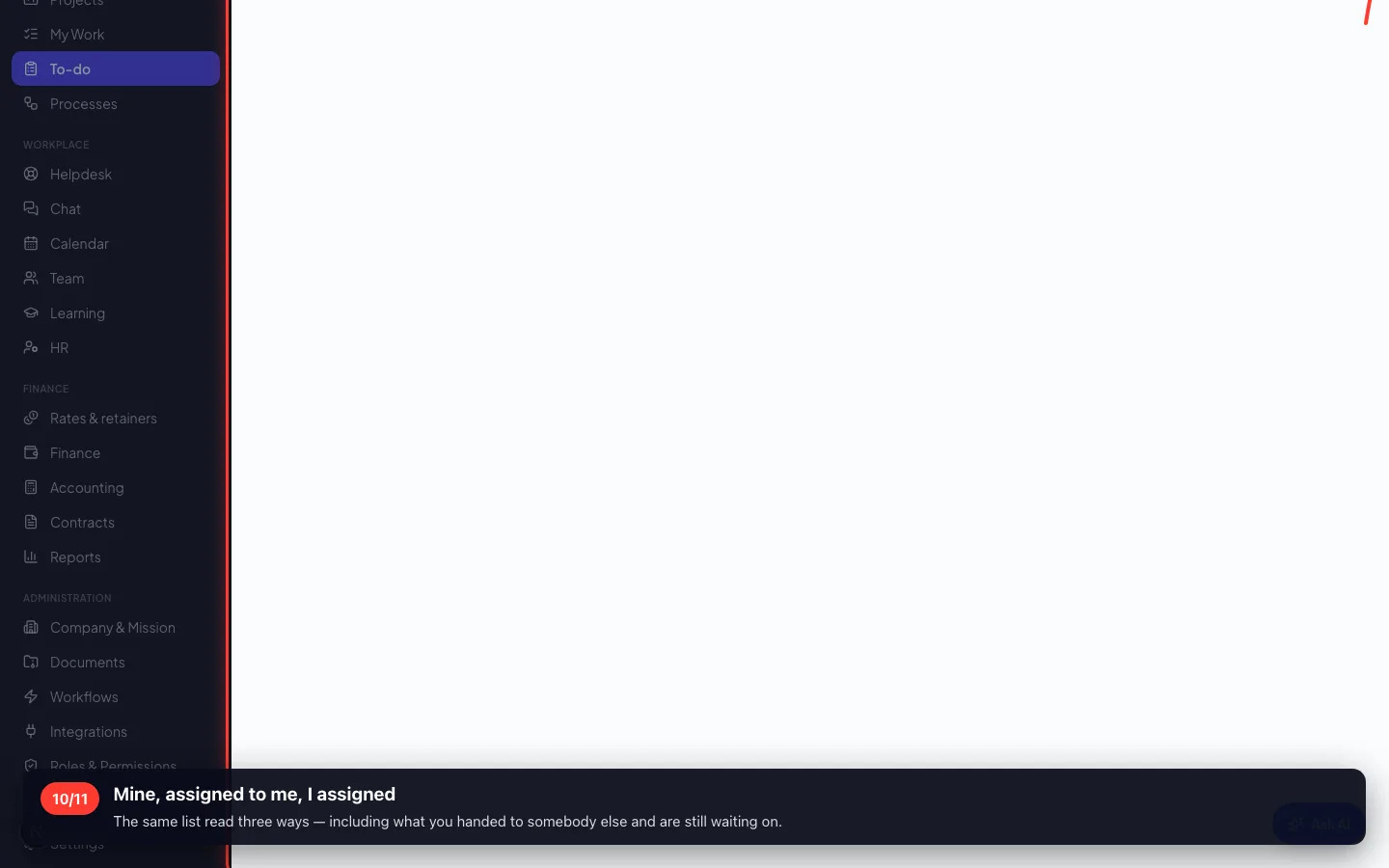
Mine, assigned to me, I assigned
The same list read three ways — including what you handed to somebody else and are still waiting on.
5 · Notifications
The bell is in-app; a direct message or a mention also reaches the phone. A channel message deliberately does not.
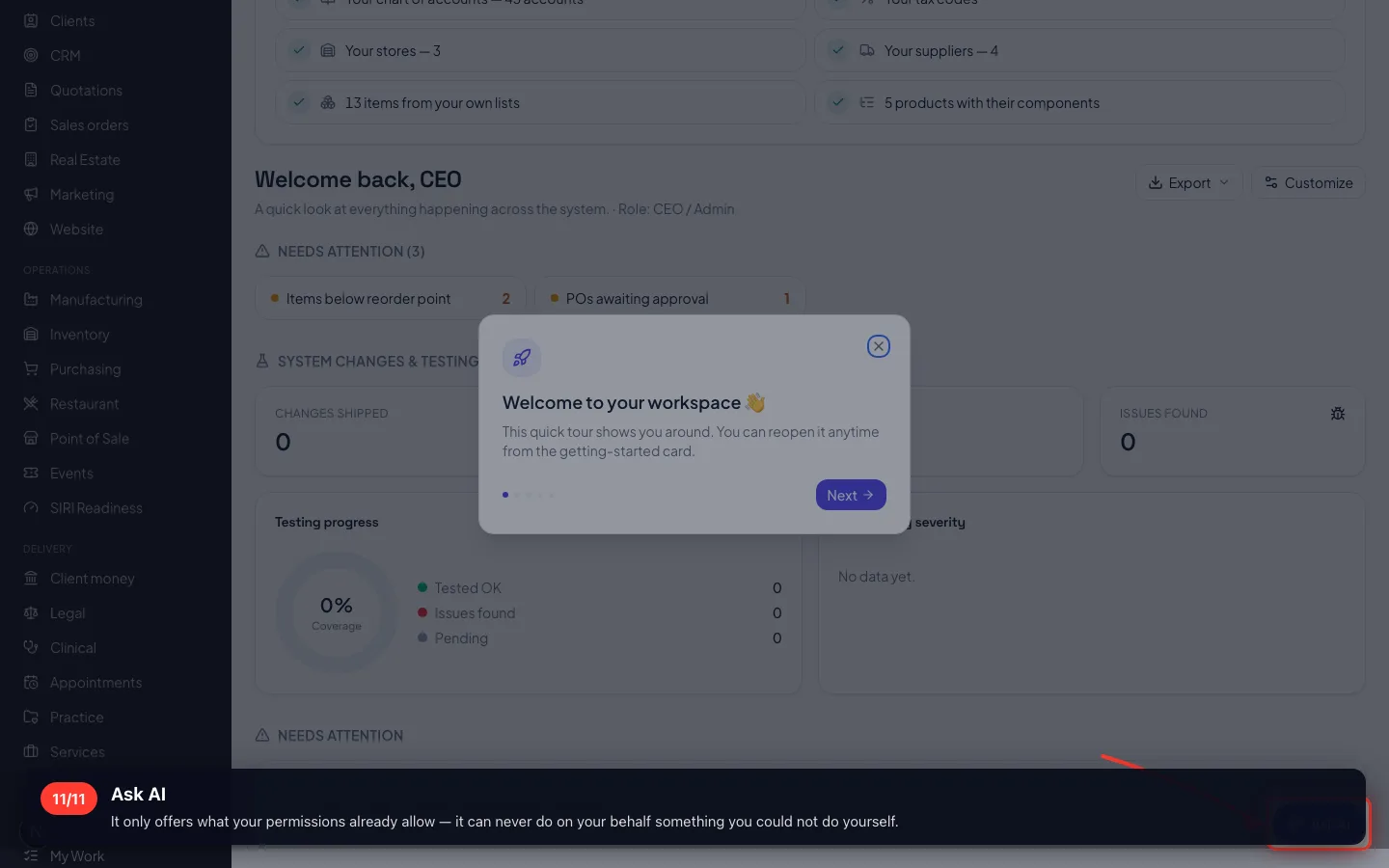
11Ask AI
It only offers what your permissions already allow — it can never do on your behalf something you could not do yourself.
Enregistré sur un espace de démonstration. Les chiffres sont fictifs, les écrans sont réels.