ZATCA Wave 25 of e-invoicing: does it include you? The SAR 187,500 threshold and the 1 February 2027 deadline
ZATCA's Wave 25 brings Phase 2 e-invoicing to businesses with VAT-subject revenue above SAR 187,500 in any year from 2022 to 2025. Here is how to check your status and integrate with Fatoora by 1 February 2027.


In short
ZATCA Wave 25 covers taxpayers whose revenue subject to VAT exceeded SAR 187,500 in any one of 2022, 2023, 2024 or 2025. They must integrate their e-invoicing solution with the Fatoora platform by 1 February 2027. ZATCA notifies targeted taxpayers directly, but you can check your own VAT returns now.
On this page
- What ZATCA announced for Wave 25
- Does Wave 25 include your business?
- Worked examples
- How to confirm you are in scope
- Phase 1 vs Phase 2: what actually changes
- What Phase 2 integration requires technically
- Readiness timeline: October 2026 to 1 February 2027
- Common mistakes to avoid
- What to ask your software vendor
- How Dopave helps
- Next step
On 24 July 2026, the Zakat, Tax and Customs Authority (ZATCA) published the criteria for Wave 25 of Phase 2 of e-invoicing, the Integration Phase. The threshold is lower than any wave before it, so many small Saudi businesses that have never connected to the Fatoora platform will now have to. This guide explains who is in scope, how to confirm it, and what to do between now and the deadline.
What ZATCA announced for Wave 25
According to the official ZATCA announcement, Wave 25 covers taxpayers whose revenue subject to VAT exceeded SAR 187,500 in 2022, 2023, 2024 or 2025. These taxpayers must integrate their e-invoicing solutions with the Fatoora platform no later than 1 February 2027.
ZATCA states that it will notify every targeted taxpayer directly. It also says that each wave is informed at least six months before its integration date, which is consistent with a July 2026 announcement for a February 2027 deadline.
For comparison, Wave 24 covered taxpayers above SAR 375,000 in 2022, 2023 or 2024, with a deadline of 30 June 2026. Wave 25 halves that threshold and adds 2025 as a reference year.
| Wave 24 | Wave 25 | |
|---|---|---|
| Revenue threshold (VAT-subject) | Above SAR 375,000 | Above SAR 187,500 |
| Reference years | 2022, 2023, 2024 | 2022, 2023, 2024, 2025 |
| Criteria published | September 2025 | 24 July 2026 |
| Integration deadline | 30 June 2026 | 1 February 2027 |
Does Wave 25 include your business?
The test is simple: look at your revenue subject to VAT for each of the four years separately. If any single year is above SAR 187,500, you fall within Wave 25 (unless an earlier wave already covered you, in which case your earlier deadline applies).
The figure that matters is revenue subject to VAT, as declared in your VAT returns. It is not profit, and it is not the total of everything that passed through your bank account.
Worked examples
| Business | VAT-subject revenue | In Wave 25? |
|---|---|---|
| Café A, Riyadh | 2022: SAR 160,000 · 2023: SAR 200,000 · 2024: SAR 170,000 · 2025: SAR 180,000 | Yes. 2023 exceeded SAR 187,500, and one year is enough. |
| Café B, Jeddah | SAR 150,000 in every year from 2022 to 2025 | Not in this wave. No year exceeded the threshold. |
| Trading company C | 2022: SAR 120,000 · 2025: SAR 240,000 | Yes. 2025 counts as a reference year in Wave 25. |
| Workshop D | SAR 400,000 in 2023 | Most likely already in Wave 24 or earlier. Check your earlier notification. |
Café B is not in Wave 25, but that does not mean it is outside e-invoicing. Phase 1 (Generation) has applied since 4 December 2021, and ZATCA continues to roll out Phase 2 in waves. A business close to the threshold should expect to be called in a later wave and plan accordingly.
How to confirm you are in scope
- Check for the ZATCA notification. ZATCA says it will notify all targeted Wave 25 taxpayers. Make sure the email and mobile number on your ZATCA account are current, because that is where official messages arrive.
- Log in to the Fatoora portal. Integration happens through the Fatoora portal, and your account there is the starting point for onboarding your invoicing solution.
- Review your VAT returns for 2022 to 2025. Add up the VAT-subject revenue for each year separately and compare each total with SAR 187,500.
- Ask your accountant to confirm. If you have branches, group structures or unusual supplies, get a written confirmation of which years cross the threshold.
If your own numbers show a year above SAR 187,500 and you have not received a notification, do not assume you are exempt. Contact ZATCA through its official channels and keep a record of the reply.
Phase 1 vs Phase 2: what actually changes
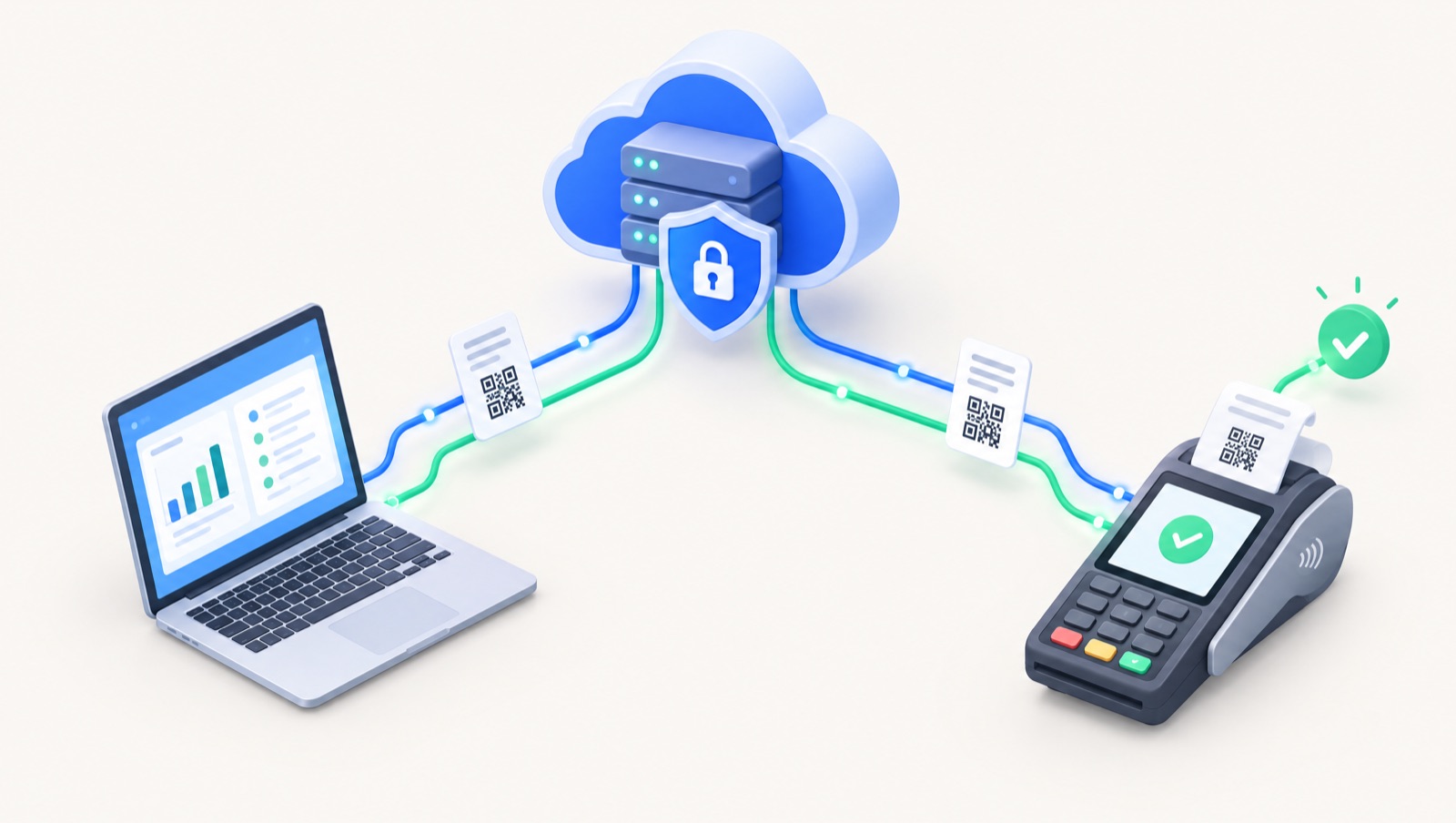
Phase 1 required businesses to stop issuing handwritten invoices or invoices made in text or spreadsheet software, and to issue and store compliant electronic invoices with a QR code. Phase 2 goes further: your invoicing solution must be connected to ZATCA's systems and must produce invoices in a specific structured format with additional fields.
| Phase 1 (Generation) | Phase 2 (Integration) | |
|---|---|---|
| Start date | 4 December 2021 | From 1 January 2023, in waves |
| Connection to ZATCA | None | Integrated with the Fatoora platform |
| Invoice format | Electronic, with required fields | Structured XML (UBL 2.1) with additional fields |
| B2B tax invoices | Issued directly to the buyer | Cleared by ZATCA before sharing with the buyer |
| B2C simplified invoices | Issued with a basic QR code | Stamped, then reported to ZATCA within 24 hours |
What Phase 2 integration requires technically
ZATCA's Detailed Guidelines for E-Invoicing and its XML implementation standard set out the requirements. In plain terms:
- UBL 2.1 XML. Each invoice and credit or debit note is generated as an XML document that conforms to the UBL 2.1 standard. A scanned or PDF-only invoice is not an e-invoice.
- Unique identifier (UUID). Every invoice carries a universally unique identifier, alongside your sequential invoice number.
- Invoice hash and chaining. Each invoice is hashed (SHA-256) and includes the hash of the previous invoice, which makes later tampering detectable.
- Cryptographic stamp. Your solution is onboarded on the Fatoora portal and receives a cryptographic stamp identifier (CSID). Each invoicing unit, such as a POS device, needs its own identifier, and every simplified invoice is stamped with it.
- QR code. Simplified invoices carry a Phase 2 QR code, which contains more data than the Phase 1 code, including elements of the stamp.
- Clearance for B2B standard tax invoices. Before you share a standard tax invoice with a business buyer, it is sent to ZATCA in real time for validation. Only the cleared invoice is valid to share.
- Reporting for B2C simplified invoices. Simplified invoices are handed to the customer immediately, then reported to ZATCA within 24 hours of generation.
For a step-by-step look at onboarding, see our guide to Fatoora integration steps.
Readiness timeline: October 2026 to 1 February 2027
Counting from mid-October 2026, you have roughly 16 weeks. A realistic plan:
- 12–31 October 2026: confirm scope. Check the ZATCA notification, review VAT-subject revenue for 2022–2025, and list every point where you issue invoices (branches, POS devices, online store, field sales).
- November 2026: choose or confirm your solution. Ask your current vendor the questions below. If the answer is unclear, shortlist alternatives now, not in January.
- November 2026: clean your master data. Complete your company details, VAT number and address, and collect VAT numbers and addresses for your business customers.
- December 2026: onboard and test. Onboard each invoicing unit on the Fatoora portal, then test standard invoices, simplified invoices, credit notes and debit notes. Fix any rejections.
- Early January 2027: go live. Switch to production at least three to four weeks before the deadline, so problems surface while there is still time.
- January 2027: monitor and train. Watch for rejected or unreported invoices daily, and train cashiers and accountants on the new flow.
- 1 February 2027: deadline. Integration must be complete by this date.
Common mistakes to avoid
- Checking only the latest year. One year above SAR 187,500 in 2022–2025 is enough. A weak 2025 does not take you out.
- Waiting for the notification before acting. ZATCA notifies targeted taxpayers, but your own numbers tell you sooner.
- Assuming a Phase 1 QR code is enough. The Phase 1 QR code does not meet Phase 2 requirements.
- Onboarding only one device. Every invoicing unit needs its own cryptographic stamp identifier.
- Sharing B2B invoices before clearance. A standard tax invoice must be cleared first.
- Forgetting credit and debit notes. Returns and corrections follow the same rules as invoices.
- No plan for connection failures. ZATCA's guidelines expect your system to retry reporting and keep evidence of attempts.
Breaking e-invoicing rules can lead to warnings and fines, which depend on the type of violation and whether it is repeated. Confirm the current amounts on ZATCA's official pages or with your adviser before planning around them.
What to ask your software vendor
- Does your solution generate UBL 2.1 XML invoices and support both clearance and reporting?
- How is each branch, POS device or online store onboarded on the Fatoora portal, and who does it?
- How do you handle credit notes, debit notes and invoice corrections?
- What happens if the connection to ZATCA fails? Do you queue and retry, and is there an audit trail?
- Are your invoice templates bilingual (Arabic and English) and do they show the Phase 2 QR code?
- How do you apply ZATCA's specification updates, and at what cost?
- Can you show a live test in the simulation environment before we go to production?
Our article on choosing ZATCA-compliant accounting software covers these criteria in more detail.
How Dopave helps
Dopave is an Arabic-first cloud ERP for Saudi Arabia, Egypt and the Gulf. Its accounting software includes ZATCA Phase 2 e-invoicing and connects with POS, inventory, an online store and CRM, so invoices from every sales channel follow the same flow. An AI copilot can draft invoices from Arabic or English text or voice. A Free plan is available for up to 3 members, and a 14-day trial needs no card.
Next step
Confirm your Wave 25 status this month, then give yourself time to test before January. For the full requirements, read our ZATCA e-invoicing overview, or start a free trial to see the integration flow in practice.
Frequently asked questions
Am I in Wave 25 if I exceeded SAR 187,500 in only one year?
Yes. ZATCA's criteria cover taxpayers whose VAT-subject revenue exceeded SAR 187,500 in 2022, 2023, 2024 or 2025. One year above the threshold is enough, even if other years were lower.
What is the Wave 25 deadline?
Targeted taxpayers must integrate their e-invoicing solution with the Fatoora platform no later than 1 February 2027.
I have not received a notification from ZATCA. Am I exempt?
Not necessarily. ZATCA says it will notify all targeted taxpayers, but if your VAT returns show a year above SAR 187,500, check the contact details on your ZATCA account and contact ZATCA through its official channels.
What is the difference between Phase 1 and Phase 2?
Phase 1, in force since 4 December 2021, requires compliant electronic invoices with a QR code. Phase 2 adds integration with ZATCA's Fatoora platform, structured UBL 2.1 XML invoices, a cryptographic stamp, clearance of B2B tax invoices and reporting of simplified invoices within 24 hours.
Do simplified (B2C) invoices need ZATCA clearance before I give them to customers?
No. Simplified invoices are stamped and given to the customer immediately, then reported to ZATCA within 24 hours. Clearance before sharing applies to standard B2B tax invoices.
What are the penalties for missing the deadline?
Breaking e-invoicing rules can lead to warnings and fines that depend on the type of violation and on repetition. Confirm current amounts on ZATCA's official pages or with your tax adviser.
Sources
- ZATCA: Criteria for selecting targeted taxpayers in Wave 25 of the Integration Phase of e-invoicing (24 July 2026)
- ZATCA: Criteria for selecting targeted taxpayers in Wave 24 of the Integration Phase
- ZATCA: What is e-invoicing (Phase 1 and Phase 2)
- ZATCA: Detailed Guidelines for E-Invoicing (Fatoora)
- ZATCA: Electronic Invoice XML Implementation Standard
- ZATCA: Electronic Invoice Security Features Implementation Standards